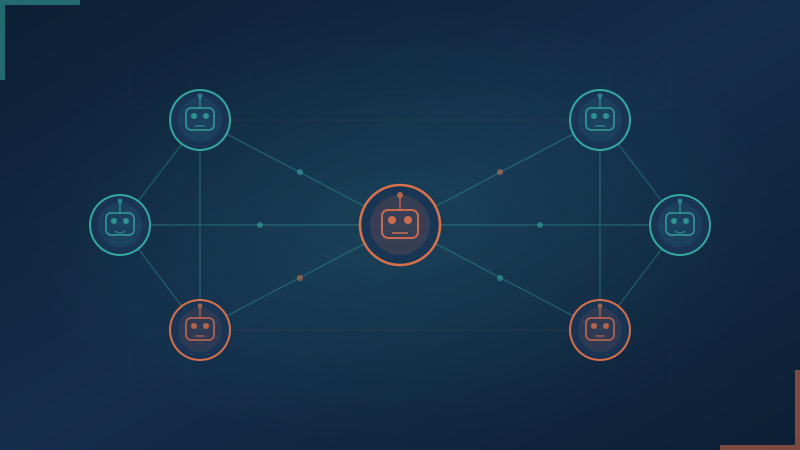
Multi-agent systems represent the natural evolution of generative AI: instead of a single model trying to do everything, an ecosystem of specialized agents collaborating to solve complex problems.
Multi-layered architecture
A well-designed multi-agent system includes: an orchestrator that plans and coordinates, specialized agents for specific tasks, a shared memory layer for context, and inter-agent communication mechanisms. Each agent has a "profile" defining its competencies, available tools, and operational constraints.
Collaboration patterns
Main inter-agent collaboration patterns include: sequential, parallel, hierarchical, and consensus-based. Pattern choice depends on task nature and latency/reliability requirements.
Real use cases
In our enterprise client work, multi-agent systems have proven valuable in: automated technology due diligence, multi-source report generation, and advanced customer support with intelligent routing between domain-specialized agents.
Tool use and integration
Multi-agent systems' true power emerges when agents can use external tools: APIs, databases, browsers, computation systems. The challenge is managing secure tool access with granular permissions and audit trails.
The governance challenge
With multi-agent systems, governance becomes more complex: who's responsible when an agent makes a wrong decision? How do you trace distributed reasoning? These are questions we address at Adalot during architectural design, before implementation.